
SLEEP is an essential function that allows your body and mind to recharge, leaving you refreshed and alert when you wake up. Healthy sleep also helps the body remain healthy and stave off diseases. Without enough sleep, the brain cannot function properly. This can impair you abilities to concentrate, think clearly, and process memories.
Most adults require between seven and nine hours of nightly sleep. Children and teenagers need substantially more sleep, particularly if they are younger than five years of age. Work schedules, day-to-day stressors, a disruptive bedroom environment, and medical conditions can all prevent us from receiving enough sleep. A healthy diet and positive lifestyle habits can help ensure an adequate amount of sleep each night – but for some, chronic lack of sleep may be the first sign of a sleep disorder.
SLEEP EVERY HUMANS NEED
Newborn (0-3 months) 14-17 hours
Infant (4-11 months) 12-15 hours
Toddler (1-2 years) 11-14 hours
Preschool (3-5 years) 10-13 hours
School-age (6-13 years) 9-11 hours
Teen (14-17 years) 8-10 hours
Young Adult (18-25 years) 7-9 hours
Adult (26-64 years) 7-9 hours
Older Adult (65 years or older) 7-8 hour
WHAT WILL HAPPEEN IF WE DON’T GET ENOUGH SLEEP?
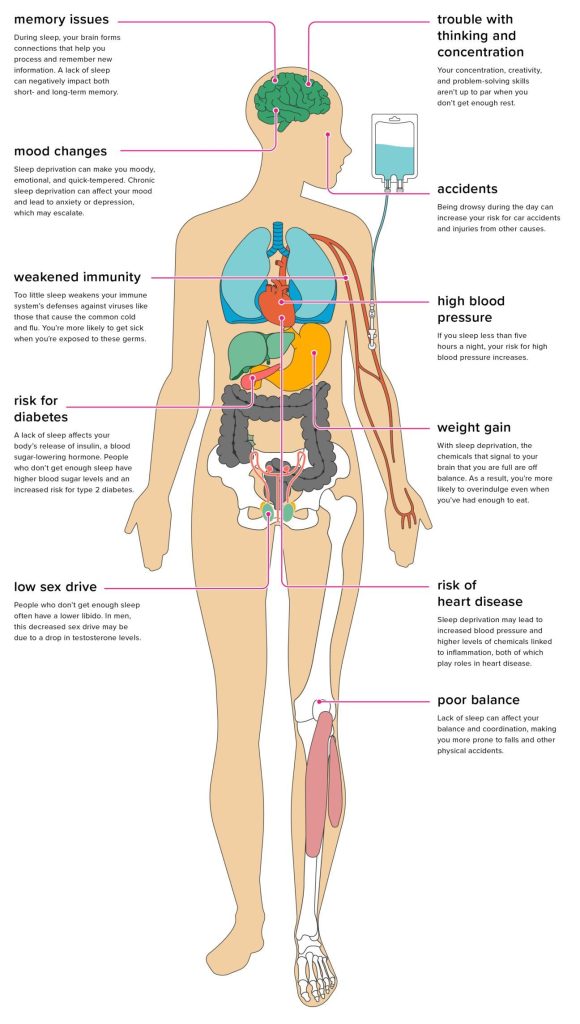
CAUSES OF SLEEP DEPRIVATION
In a nutshell, sleep deprivation is caused by consistent lack of sleep or reduced quality of sleep. Getting less than 7 hours of sleep on a regular basis can eventually lead to health consequences that affect your entire body. This may also be caused by an underlying sleep disorder.
Your body needs sleep, just as it needs air and food to function at its best. During sleep, your body heals itself and restores its chemical balance. Your brain forges new thought connections and helps memory retention.
Without enough sleep, your brain and body systems won’t function normally. It can also dramatically lower your quality of life.
A review of studies in 2010 found that sleeping too little at night increases the risk of early death.
Noticeable signs of sleep deprivation include:
- excessive sleepiness
- frequent yawninh
- irritability
- daytime fatigue
HOW TO HAVE A GOOD SLEEP
- Creating a Sleep-Inducing Bedroom
- Optimizing Your Sleep Schedule
- Crafting a Pre-Bed time Routine
- Fostering Pro-Sleep Habits During the Day
BENEFITS OF A GOOD SLEEP

1. Sleep helps reduce stress
If your body doesn’t get enough sleep, it can react by producing an elevated level of stress hormones, which are a natural result of today’s fast-paced lifestyles. Deep and regular sleep can help prevent this.
2. Sleep can improve your memory
Ever noticed that when you’re really tired it’s harder to remember things? Basically, this is your brain telling you that it’s not getting enough sleep. When you sleep well, your body may be resting but your brain is busy organising and storing memories. So getting more quality sleep will help you remember and process things better.
3. Sleep can lower your blood pressure
Higher blood pressure increases your chances of heart attacks and strokes, but getting plenty of restful sleep encourages a constant state of relaxation that can help reduce blood pressure and generally keep it under control.
4. Sleep helps your body to fight back
While you’re sleeping your body is producing extra protein molecules that can strengthen your ability to fight infections. If you’re feeling a bit run down and don’t want it to turn into a full-blown cold, go to bed early and get lots of rest.
5. Sleep can help you maintain your weight
Unfortunately, sleep won’t directly make you lose weight, but it can help you keep it under control by regulating the hormones that affect your appetite and reducing your cravings for high calorie foods.
6. Sleep puts you in a better mood
Lack of sleep can make us more agitated, so we’re more likely to snap at our boss or be grumpy with a loved one – neither of which is a good thing. The better you sleep, the better your ability to stay calm, controlled and reasonable.
7. Sleep could reduce your chances of diabetes
Some research studies have shown that not getting enough sleep may lead to type 2 diabetes by affecting how your body processes glucose. It’s not conclusive by any means, but it’s yet another indication of how important the benefits of sleep can be.
8. Sleep helps keep your heart healthy
A regular sleep pattern can help to lower the levels of stress and inflammation to your cardiovascular system, which in turn can reduce your chances of a heart condition.
9. Sleep can be a painkiller
If you’re suffering pain from a recent injury like a sprained ankle, getting plenty of sleep can actually make it hurt less. Many studies have shown a link between sleep loss and a lower pain threshold. Basically the more sleep you get, the less pain you might be in.
10. Sleep can make you smarter
Along with a great night’s sleep, grabbing a quick nap in the daytime can contribute towards making your brain more effective and productive. You won’t necessarily be answering all the questions on University Challenge, but you may well feel sharper, more attentive, and focused throughout the day.
Sleep in an environment that promotes rest with proper lighting, a comfortable temperature, and a supportive mattress. Avoid alcohol, caffeine, and nicotine in the evenings. Power down your screens well before bedtime and try engaging in something analog, such as reading a book or meditating.
SO GO TO SLEEP NOW!

“Never waste any time you can spend sleeping.”
Frank H. Knight
 How to Have a Good Sleep